Saturday, April 1, 2023

What Is “April Fools Day” All About?

April Fools' Day, also known as All Fools' Day, is an annual celebration observed by some English-speaking countries (e.g., the USA, and Great Britain) on the first day of April. This day is marked by the exchange of various pranks and practical jokes among friends, family, and colleagues. While the exact origins of this tradition are unknown, there are several theories about how it began.

One of the earliest references to April Fools' Day dates back to 1392 when Geoffrey Chaucer's “The Canterbury Tales” was published. In one of the stories, Chaucer references the day as “Syn March bigan thritty dayes and two,” which translates to “32 days after March began.” This has led some historians to believe that April Fools’ Day may have originated as a way to mock those who were unaware of the change from the Julian calendar to the Gregorian calendar in the 16th century. The Julian calendar marked the New Year on March 25th, but the Gregorian calendar moved it to January 1st. Those who continued to celebrate the New Year on March 25th were mocked by others who had adopted the new calendar.

April Fools’ Day

Another theory about the origins of April Fools’ Day comes from the Roman festival of Hilaria, which was celebrated at the end of March. During this festival, people would dress up in costumes and play practical jokes on each other. It is possible that this tradition was passed down through the ages and eventually became part of the modern-day celebration.

Some historians also believe that April Fools’ Day may have originated as a way for the poor to mock the rich. In medieval times, the poor would often beg for food and money from the wealthy. However, on April 1st, they would play pranks on the rich as a way of getting back at them. This tradition of “reversal” is still observed in some cultures today, where people will switch roles with their superiors or engage in other forms of role reversal.

Regardless of its origins, April Fools’ Day has become a popular tradition around the world. People of all ages take shots at playing pranks on each other, and to some, it has become a day of laughter and light-hearted fun. Whether it originated as a way to mock those who were unaware of the calendar changes or as a way for the poor to get back at the rich, April Fools’ Day remains a loyally celebrated tradition for many of today’s silliest practical jokers.

Wednesday, March 15, 2023

What Is Bitcoin, and Where Did It Come From?

Bitcoin Logo (2014)

In 2008, a person or group of people under the pseudonym of Satoshi Nakamoto introduced the world to a new digital currency called Bitcoin. Since then, Bitcoin has grown into a global phenomenon with millions of users and a market capitalization of over $1 trillion. However, the history and workings of Bitcoin are often misunderstood. In this article, we will explore the history of Bitcoin and how it works.

The History of Bitcoin

Bitcoin's roots can be traced back to a white paper published by Satoshi Nakamoto titled "Bitcoin: A Peer-to-Peer Electronic Cash System" in October 2008. The white paper described a decentralized digital currency that could be sent from person to person without the need for intermediaries such as banks.

A stack of gold Bitcoins.
A Stack of gold Bitcoins.
Photo courtesy, Karolina Grabowska, Pexels

The first Bitcoin transaction took place in January 2009, when Satoshi Nakamoto sent 10 Bitcoins to Hal Finney, a computer programmer and cypherpunk. The value of those 10 Bitcoins at the time was negligible, but today they would be worth millions of dollars.

In the early days, Bitcoin was mainly used by tech-enthusiasts and cypherpunks who saw it as a way to bypass traditional financial institutions and government control. However, over time, Bitcoin gained mainstream acceptance, and today it is used for a wide range of purposes, from online purchases to investments.

How Bitcoin Works

At its core, Bitcoin is a decentralized digital currency that is based on a technology called blockchain. The blockchain is a public ledger that records all Bitcoin transactions. Each block on the blockchain contains a hash of the previous block, creating a chain of blocks that cannot be altered without altering all subsequent blocks.

When someone sends Bitcoin to another person, the transaction is broadcast to the network of Bitcoin users. These users validate the transaction using complex algorithms and confirm it by adding it to a new block on the blockchain. The person who confirms the transaction, also known as a miner, is rewarded with newly created Bitcoins.

One of the most significant features of Bitcoin is that it has a finite supply. There will only ever be 21 million Bitcoins in existence, and as of 2021, over 18 million Bitcoins have already been mined. This limited supply means that Bitcoin is deflationary, meaning that its value should increase over time.

Another key feature of Bitcoin is its anonymity. Bitcoin transactions are pseudonymous, which means that they are linked to a public address rather than a person's identity. While it is possible to trace Bitcoin transactions, it is challenging to link them to specific individuals, making it a popular choice for people who value privacy.

Conclusion

Bitcoin has come a long way since its inception in 2008. It has grown from a niche digital currency used by a small group of enthusiasts to a global phenomenon with millions of users. While the history of Bitcoin is fascinating, it is the technology behind it that makes it truly revolutionary. The blockchain has the potential to transform not just the way we handle money, but also the way we interact with each other and the world around us. Whether you are an investor, a tech-enthusiast, or just curious, Bitcoin is definitely worth learning more about.

Wednesday, March 1, 2023

The History and Evolution of Bluetooth Technology - Bluetooth 1.0 - 5.x

Bluetooth Logo (2020)

Bluetooth technology has come a long way since its inception in 1994. Over the past few decades, Bluetooth has evolved into a robust and versatile technology that has revolutionized the way we connect devices wirelessly. From its early beginnings as a simple wireless technology used in cordless phones, Bluetooth has evolved into a ubiquitous technology used in a wide variety of devices, from smartphones to smart home appliances.

Bluetooth 1.0

The first version of Bluetooth, Bluetooth 1.0, was released in 1999. This version was designed primarily for wireless headsets and hands-free car systems. It was a simple technology that could only transfer data at a rate of 1 Mbps, which was not sufficient for high-quality audio streaming or data transfer. However, it was a major milestone in wireless technology as it enabled hands-free communication without wires.

Bluetooth 1.1

Bluetooth 1.1 was released in 2001 and included several improvements over the first version. The main improvement was the introduction of three new features - secure simple pairing, extended inquiry response, and sniff subrating. Secure simple pairing allowed devices to connect securely without requiring a PIN code. Extended inquiry response allowed devices to exchange more information during the discovery process. Sniff subrating was introduced to improve power management and extend battery life.

Bluetooth 1.2

Bluetooth 1.2 was released in 2003 and brought even more improvements to the technology. The most significant improvement was the introduction of Adaptive Frequency Hopping (AFH), which improved the coexistence of Bluetooth with other wireless technologies operating in the same frequency band. Other improvements included faster connection setup times, improved audio quality, and enhanced error correction.

Bluetooth 2.0

Bluetooth 2.0 was introduced in 2004 and was a significant improvement over the previous version. It had a much faster data transfer rate of up to 3 Mbps, which made it possible to stream high-quality audio and video wirelessly. Bluetooth 2.0 also introduced a feature called Enhanced Data Rate (EDR), which improved the quality of audio and video streaming. This version was widely adopted by the smartphone industry, which drove its popularity and made it a household name.

Bluetooth 2.1

Bluetooth 2.1 was released in 2007 and included several improvements over the previous version. The main improvement was the introduction of secure simple pairing (SSP), which replaced the older PIN code pairing method. SSP allowed devices to connect securely without requiring the user to enter a PIN code. Other improvements included faster connection setup times and improved power management.

Bluetooth 3.0

Bluetooth 3.0 was released in 2009 and was designed to address the limitations of previous versions. It had a data transfer rate of up to 24 Mbps, which made it possible to transfer large files quickly. This version also introduced a new feature called High-Speed Bluetooth (HSB), which allowed for faster data transfer rates. Bluetooth 3.0 was the first version to support Wi-Fi connectivity, which made it possible to transfer data between Bluetooth and Wi-Fi devices seamlessly.

Bluetooth 4.0

Bluetooth 4.0 was released in 2010 and was designed to be more energy-efficient than previous versions. It was also designed to be more secure and reliable, making it ideal for use in medical devices and other sensitive applications. Bluetooth 4.0 introduced a new feature called Bluetooth Low Energy (BLE), which enabled devices to consume less power and operate for longer periods of time. This version was widely adopted by the Internet of Things (IoT) industry, which drove its popularity and made it a ubiquitous technology.

Bluetooth 5.0

Bluetooth 5.0 was released in 2016 and was designed to improve upon the previous versions of Bluetooth. It had a much faster data transfer rate of up to 50 Mbps, which made it possible to transfer large files quickly. This version also introduced a new feature called Long Range, which enabled devices to communicate over longer distances, making it ideal for use in smart home and industrial applications. Bluetooth 5.0 also introduced a feature called Bluetooth Mesh, which allowed for the creation of large-scale networks of Bluetooth devices.

Bluetooth 5.1

Bluetooth 5.1 was released in 2019 and was designed to improve the accuracy of Bluetooth location services. This version introduced a new feature called Angle of Arrival (AoA), which allowed for the precise determination of the location of Bluetooth devices. This feature made it possible to create indoor navigation systems and asset-tracking applications.

Bluetooth 5.2

Bluetooth 5.2 was released in 2020 and was designed to improve the reliability and security of Bluetooth connections. This version introduced a new feature called LE Audio, which enables high-quality audio streaming over Bluetooth Low Energy. Bluetooth 5.2 also introduced a new feature called Isochronous Channels, which enables synchronized audio and video streaming over Bluetooth.

Conclusion

In conclusion, Bluetooth technology has come a long way since its inception in 1994. It has evolved significantly with each new version, improving on its capabilities and increasing its range and speed. Today, Bluetooth technology is an essential part of our daily lives, enabling us to connect and transfer data between our devices seamlessly.

Tuesday, February 28, 2023

The History and Evolution of PCI Express (PCIe) Bus Technology - PCIe 1.0 - PCIe 6.0

PCI Express logo

PCI Express (Peripheral Component Interconnect Express) is a high-speed computer expansion bus standard used to connect computer components such as graphics cards, network adapters (NICs), and storage devices to the motherboard of a computer. The development of PCI Express began in 1999, and the first version of the standard, PCI Express 1.0, was released in 2003.

PCI Express 1.0

A PCI Express slot on a motherboard.

The first version of PCI Express, also known as PCIe 1.0, was designed to replace the aging PCI (Peripheral Component Interconnect) and AGP (Accelerated Graphics Port) standards. PCIe 1.0 had a single lane with a data transfer rate of 2.5 Gbps (Gigabits per second) in each direction, providing a total bandwidth of 2 GB/s (Gigabytes per second). PCIe 1.0 also introduced several new features, such as packet-based communication, hot-plugging, and power management.

PCI Express 2.0

PCI Express 2.0 was released in 2007 and doubled the data transfer rate of PCIe 1.0 to 5 Gbps per lane, providing a total bandwidth of 4 GB/s per lane. PCIe 2.0 also introduced new features such as link retraining and dynamic link-width control, which allowed the link width to be changed dynamically without interrupting the communication between devices.

PCI Express 3.0

PCI Express 3.0 was released in 2010 and increased the data transfer rate of PCIe 2.0 to 8 Gbps per lane, providing a total bandwidth of 8 GB/s per lane. PCIe 3.0 also introduced new features such as improved power management, data integrity, and enhanced error reporting.

PCI Express 4.0

PCI Express 4.0 was released in 2017 and doubled the data transfer rate of PCIe 3.0 to 16 Gbps per lane, providing a total bandwidth of 16 GB/s per lane. PCIe 4.0 also introduced new features such as lane margining, which allows the system to test and adjust the signal quality of each lane, and backward compatibility with PCIe 3.0 and PCIe 2.0 devices.

PCI Express 5.0

PCI Express 5.0 was released in 2019 and doubled the data transfer rate of PCIe 4.0 to 32 Gbps per lane, providing a total bandwidth of 32 GB/s per lane. PCIe 5.0 also introduced new features such as equalization techniques, which compensate for signal distortion and noise, and cyclic redundancy check (CRC) protection, which improves data integrity.

PCI Express 6.0

PCI Express 6.0 is the next version of the standard and is expected to be released in 2023. PCIe 6.0 will double the data transfer rate of PCIe 5.0 to 64 Gbps per lane, providing a total bandwidth of 64 GB/s per lane. PCIe 6.0 will also introduce new features such as PAM-4 signaling, which uses four-level pulse amplitude modulation to increase data transfer rates, and Forward Error Correction (FEC), which corrects errors in the transmission of data.

(wikipedia.org, 2023)
(courtesy, Wikipedia.org, 2023)

Conclusion

The history of PCI Express has seen a continuous increase in data transfer rates and bandwidth, allowing for faster and more efficient communication between computer components. The latest version of the standard, PCIe 6.0, is expected to further improve data transfer rates and introduce new features that will enhance data integrity and signal quality. As technology continues to evolve, PCI Express will continue to play a crucial role in the development of high-performance computing systems.

Monday, February 27, 2023

Phishing, Vishing and Smishing: What You Need To Know To Better Protect Yourself

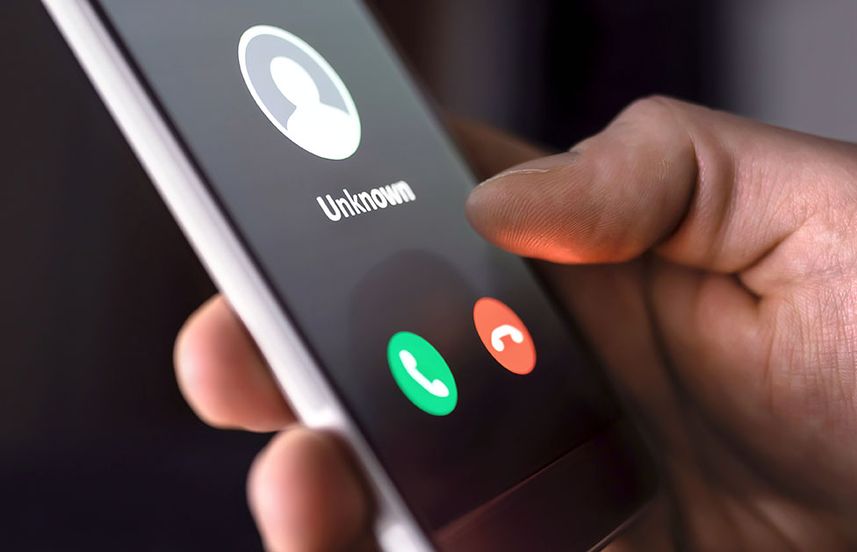
Vishing phone call

In today's digital age, phishing, vishing, and smishing have become common types of cyberattacks that threaten people's online security. These attacks are designed to trick individuals into revealing sensitive information, such as login credentials, credit card numbers, or personal data. In this article, we will explore what phishing, vishing, and smishing are, and what steps people can take to protect themselves from these attacks.

Phishing: Phishing is a type of cyberattack that involves sending emails, text messages, or social media messages to individuals, posing as a legitimate organization or business. These messages usually contain a link or attachment that, when clicked, leads the recipient to a fake website that looks identical to the legitimate one. The goal of the attacker is to get the victim to enter their login credentials or other sensitive information, which the attacker can then use to steal money or sensitive information.

Vishing: Vishing, or voice phishing, is a type of phishing attack that involves phone calls. The attacker usually poses as a representative of a legitimate organization, such as a bank or government agency, and tries to get the victim to reveal their sensitive information. The attacker may use various techniques, such as urgency, threats, or promises of rewards, to get the victim to comply.

Smishing: Smishing, or SMS phishing, is a type of phishing attack that uses text messages to trick victims into revealing sensitive information. Like phishing attacks, smishing messages usually contain a link that, when clicked, leads the victim to a fake website. The attacker may also use social engineering techniques, such as urgency or fear, to get the victim to click the link.

Protecting yourself from phishing, vishing, and smishing: Fortunately, there are several steps you can take to protect yourself from these types of attacks:

  1. Be suspicious of unsolicited messages: If you receive an email, phone call, or text message from an unknown sender, be suspicious. Check the sender's email address, phone number, or website URL to make sure they are legitimate.
  2. Don't click on links or download attachments: Avoid clicking on links or downloading attachments from unknown senders, especially if the message seems suspicious or too good to be true.
  3. Verify requests for information: If someone asks you to provide sensitive information, such as your login credentials or credit card number, verify their identity first. Call the organization or business directly to confirm the request.
  4. Keep your software up-to-date: Keep your operating system, web browser, and other software up-to-date to ensure that you have the latest security patches and bug fixes.
  5. Use security software: Install and use security software, such as antivirus and anti-malware programs, to protect your computer and devices from cyberattacks.
  6. Educate yourself: Learn more about phishing, vishing, and smishing attacks so you can recognize them when they occur. Share this knowledge with your friends and family to help them stay safe online.

In conclusion, phishing, vishing, and smishing attacks are serious threats to our online security. By following the tips mentioned above, we can better protect ourselves from these attacks and keep our personal and sensitive information safe. Remember to stay vigilant and always be suspicious of unsolicited messages.

Sunday, February 26, 2023

Here’s why it’s not such a good idea to share details regarding your device’s anti-virus software, publicly online.

Security

In today's digitally connected world, personal computing devices have become an essential part of our daily lives. With the rise of cyber threats and online attacks, antivirus software has become a necessary tool to protect our devices and data. However, it is not advisable to share details about your antivirus software publicly, online, as it can put your device and personal information at risk.

Here are some reasons why sharing details about your antivirus software publicly, online, is not a good idea:

  1. Security Risks: By sharing details about your antivirus software online, you are essentially providing valuable information to potential cybercriminals. They can use this information to exploit vulnerabilities in the software, bypass security measures, and gain unauthorized access to your device and personal information.
  2. Increased Vulnerability: Sharing details about your antivirus software online can also make your device more vulnerable to attacks. Cybercriminals can use the information you provide to tailor their attacks specifically to your device and antivirus software, making it more challenging for the software to detect and mitigate the attack.
  3. Privacy Concerns: Sharing details about your antivirus software publicly, online, can also compromise your privacy. Cybercriminals can use this information to track your online activities, monitor your browsing habits, and collect personal data, such as login credentials, financial information, and other sensitive information.
  4. Social Engineering Attacks: Cybercriminals can use the information you provide about your antivirus software to trick you into downloading malware or other malicious software. They can use social engineering techniques to create fake antivirus software updates or alerts, convincing you to download and install the malware on your device.
  5. Impact on Antivirus Software Performance: Sharing details about your antivirus software publicly, online, can also impact the performance of the software. Cybercriminals can use the information you provide to create malware specifically designed to evade the software's detection and protection mechanisms, rendering it ineffective.

In conclusion, sharing details about your antivirus software publicly, online, is not a good idea as it can put your device and personal information at risk. It is essential to keep your antivirus software up to date, use strong passwords, and avoid sharing any personal information online. By taking these steps, you can help protect your device and data from cyber threats and online attacks.

Wednesday, February 22, 2023

The History of USB (Universal Serial Bus) Technology - From USB 1.0 to USB4

USB logo

Universal Serial Bus (USB) technology has become ubiquitous in modern computing and consumer electronics. USB allows for the transfer of data and power between devices, making it an essential component in today's connected world. In this article, we will explore the evolution of USB technology from its early days as USB 1.0 to the latest version, USB4.

USB 1.0

The USB 1.0 specification was released in 1996, and it was the first standardized USB interface. It offered a data transfer rate of up to 12 Mbps, which was much faster than the existing parallel and serial ports. USB 1.0 also introduced the concept of plug-and-play, which allows devices to be connected and used without requiring any additional configuration. However, USB 1.0 had its limitations, such as its inability to supply power to connected devices.

USB 1.1

In 1998, the USB 1.1 specification was released, which improved upon the original USB 1.0. USB 1.1 added support for lower-speed devices and allowed for power to be supplied to connected devices. It also introduced the concept of bus-powered devices, which could draw power directly from the USB port, eliminating the need for an external power source. USB 1.1 had a maximum data transfer rate of 12 Mbps, which remained the same as USB 1.0.

USB 2.0

The USB 2.0 specification was released in 2000, and it was a significant improvement over its predecessors. USB 2.0 offered a maximum data transfer rate of 480 Mbps, which was 40 times faster than USB 1.1. It also introduced support for new devices such as webcams and external hard drives. USB 2.0 also improved the power delivery capabilities, allowing devices to draw up to 500mA of power from the USB port.

USB 3.0

SuperSpeed USB logo

USB 3.0 was introduced in 2008, and it offered even faster data transfer rates than its predecessors. USB 3.0 had a maximum data transfer rate of 5 Gbps, which was ten times faster than USB 2.0. It also introduced a new transfer mode called SuperSpeed, which allowed for faster data transfer rates while using less power. USB 3.0 also improved power delivery capabilities, allowing for devices to draw up to 900mA of power from the USB port.

USB 3.1

The USB 3.1 specification was released in 2013 and improved upon the USB 3.0 specification. USB 3.1 offered faster data transfer rates than USB 3.0, with a maximum transfer rate of 10 Gbps. It also introduced a new reversible USB Type-C connector, which is now widely used in modern devices. USB 3.1 also improved power delivery capabilities, allowing for devices to draw up to 100W of power from the USB port.

USB4

USB4 was introduced in 2019 and is the latest version of USB technology. USB4 builds upon the USB 3.2 and Thunderbolt 3 specifications, offering even faster data transfer rates and more advanced features. USB4 has a maximum data transfer rate of 40 Gbps, which is four times faster than USB 3.2. It also introduces support for dual-lane operation, which allows for two lanes of 20 Gbps each to be used simultaneously. USB4 also improves power delivery capabilities, allowing devices to draw up to 100W of power from the USB port.

Conclusion

In conclusion, USB technology has come a long way since its introduction in the mid-1990s. Each new version has brought significant improvements in terms of data transfer speeds, power delivery, and the ability to connect multiple devices simultaneously. As technology continues to advance, it will be interesting to see what new advancements USB 5 will bring.

Friday, January 20, 2023

Wi-Fi 7 vs. Previous Generations of Wi-Fi –How Does it Compare?

Wi-Fi Generations

Wi-Fi 7, also known as 802.11be, is the next generation of Wi-Fi technology that is currently being developed by the IEEE. This new technology promises to bring a number of improvements over previous generations of Wi-Fi, including faster speeds, increased capacity, better coverage, lower latency, and enhanced security.

One of the most notable improvements of Wi-Fi 7 over previous generations is its expected speed. Wi-Fi 7 is expected to offer faster speeds than its predecessor, Wi-Fi 6E (802.11ax), potentially reaching speeds of up to 20 Gbps. This will allow for faster downloading and streaming of large files, as well as more seamless video conferencing and online gaming.

Another advantage of Wi-Fi 7 is its increased capacity. Wi-Fi 7 is expected to support more simultaneous connections than Wi-Fi 6E, which will help to reduce congestion in crowded areas. This will be particularly beneficial in public spaces such as airports and stadiums, where many people are trying to connect to the same network at the same time.

Wi-Fi 7 also promises to have better coverage than previous generations. The new technology is expected to have better coverage than Wi-Fi 6E, which will help to reduce the number of "dead zones" in homes and buildings. This will allow for more consistent and reliable connectivity throughout a given area.

In addition to its improved speed, capacity, and coverage, Wi-Fi 7 is expected to have lower latency than Wi-Fi 6E. Latency is the delay between when a signal is sent and when it is received, and lower latency will help to reduce delays in online gaming and other real-time applications. This will provide a more seamless and responsive experience for users.

Finally, Wi-Fi 7 will introduce new security features to protect against emerging threats and will be more resilient to security attacks. Wi-Fi 7 will use advanced encryption and authentication methods, which will help to protect users’ personal information and devices from hacking and other cyber threats.

It is worth noting that Wi-Fi 7 is still under development and some of the features and improvements mentioned above may not be final or may change. However, Wi-Fi 7 is expected to be a significant improvement over previous generations of Wi-Fi and will bring many benefits to users in terms of speed, capacity, coverage, latency, and security.